
Interview to Liubov Lavreniuk
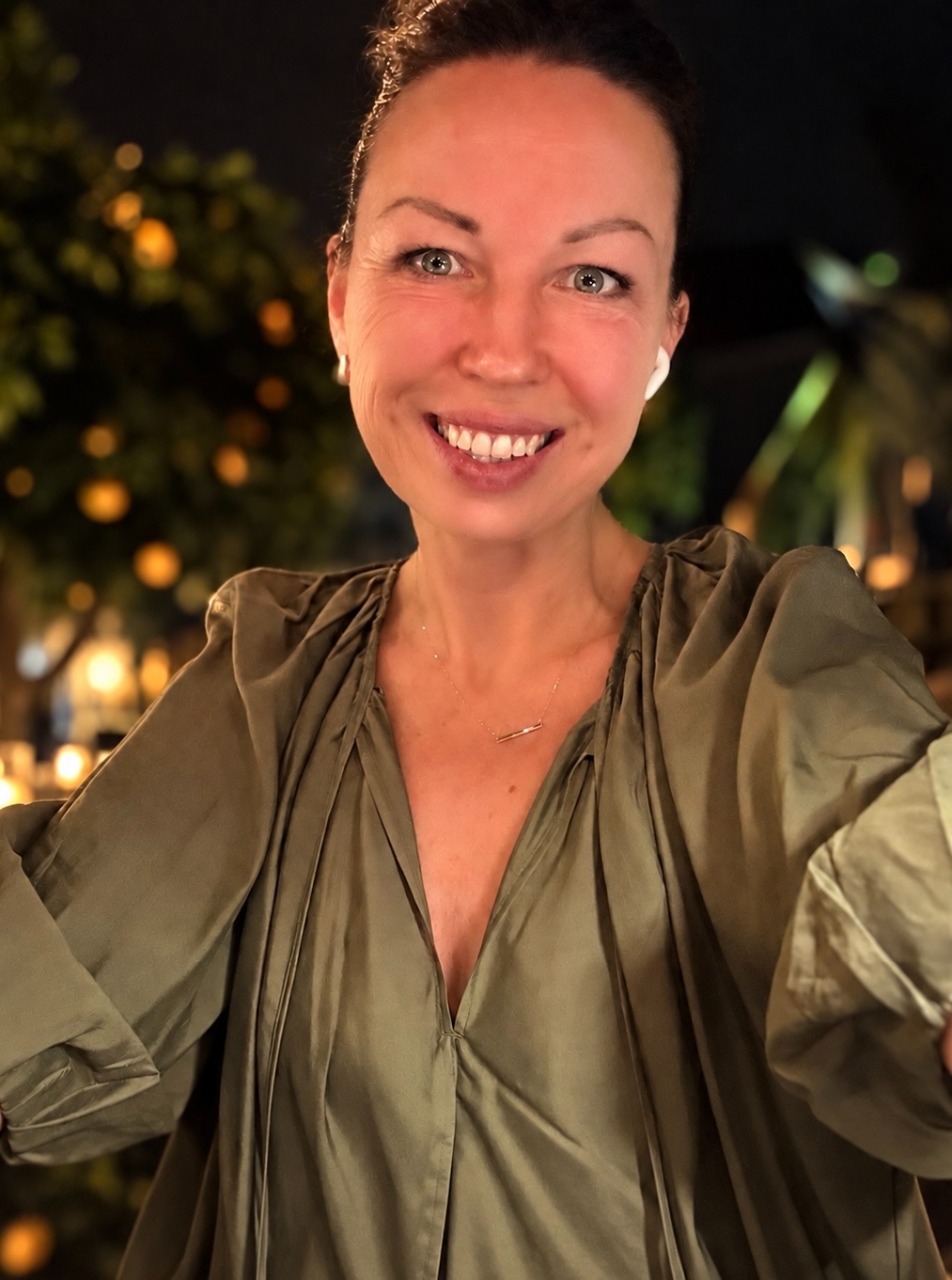
A content creator, digital marketing and storytelling professional with a global perspective and Ukrainian roots, she had to leave the country with only one suitcase because of the war that began almost five years ago, heading to Portugal. Despite some apprehension, the adaptation went well thanks to the support she received, notably from the chef of the first restaurant where she worked. However, there were some problems, such as learning the language. Liubov Lavreniuk still has doubts about a possible return to Ukraine, where she has family and greater financial stability.
"Portugal has always been close to my way of being"
Why did you decide to move to Portugal?
I think I chose Portugal long before I moved here. I had already visited the country several times and, although I had traveled to about twenty-five to thirty countries, Portugal seemed close to my way of being. The food, the friendliness of the people, and the landscape mattered, but there was something more intuitive: here I felt strong. I felt at home. Somehow, I knew that one day I would live here. The beginning of the war in Ukraine led me to leave. I left with only one suitcase and no doubts about my destination. I wasn't afraid of that decision. I couldn't know what awaited me, but I traveled with the calm conviction that Portugal was where I wanted to be.
At what point did your expectations of the country begin to materialize?
Feeling an affinity with a country and learning to live in it are different experiences. My first two years passed in a kind of fog. He was always doing what was necessary, often without time to understand what he felt. At night, loneliness was palpable. Portuguese was a particular challenge. I had taught English for over twenty years, but it took me about a month to learn how to greet someone and count to ten. There's some irony in that. It took two or three years to start feeling more capable of the language. Support came through people, from language courses provided by the state, and from teachers I remember with gratitude. Gradually, I also understood the workings of the system better and felt more secure regarding my rights as a worker. Only now, after four years, have I finally gained clarity regarding my documentation. This has given me the energy to make plans. My expectations have been fulfilled; I continue building this life.
What was the first difficulty you encountered in Portugal?
The language barrier was one of the first obstacles, but practical issues, such as finding accommodation, didn't scare me too much. What hurt the most was the news from Ukraine. I could be in a beautiful and peaceful place, knowing that, in my country, people were living through a war. Armação de Pêra gave me something to hold on to. Outside the tourist season, the beaches were almost empty. I would walk towards Galé, often covering about ten kilometers a day. The sounds of the ocean, the colors, and the mild winter were a balm. They didn't eliminate the pain, but they gave me moments when I could breathe.
Do you remember the first thing you did when you arrived in Portugal?
The clearest memory of those first days is my birthday on the rooftop terrace of the house where I found temporary accommodation. I was contemplating an extraordinary sunset, and tears streamed down my face. I felt immense happiness at being in that place. At the same time, she was alone, far from her family, without a clear idea of what was to come. Beauty and sadness coexisted. I remember this more clearly than any practical detail of her arrival: a woman on a terrace, deeply touched by the place she had chosen, facing a future she couldn't yet imagine.
Do the people who supported you most during your integration still hold the same importance for you?
Yes. We keep in touch, and these people will always have a place in my heart. My first boss at a restaurant was demanding. He asked me how I planned to work without speaking Portuguese. My answer was simple: I needed to work. He taught me tasks I had never done before and later became my friend. When I had difficulties with settling in, he personally intervened to help me be heard. In subsequent jobs, my local colleagues treated me with great care. Working as a waitress and hostess brought me truly happy moments: beautiful places, the ocean nearby, and visitors eager to enjoy life. I felt that energy too. I still remember Sérgio, an older gentleman who sold açaí. Our daily conversations gave me Portuguese practice, perspective, and encouragement. Not all professional experiences were equally warm, but those smiles and small gestures of care gave me strength.
What opportunities did Portugal offer you?
Portugal changed the course of my life. In Ukraine, I had my own English courses and a business related to education. Here, I entered the hotel and restaurant industry. I undertook research and did work I never imagined I would do. It was a step to the side, into unknown territory, which broadened my world. I started studying marketing, an area to which I now dedicate myself seriously, and developing photography and video professionally. I always felt that, in this country, I would inevitably end up becoming a painter, photographer, or writer. There is so much I want to record: the light on the tiled roofs, the narrow streets, a small café, the outline of the cliffs above the ocean. For me, these images demand to be preserved, in words or through a lens. Storytelling has become central to my work. I feel like I caught a wave and want to continue in this direction. Many years ago, when I read *The World Is Flat* by Thomas L. Friedman, I didn't imagine to what extent the book's central idea would reflect my own life. Here in Portugal, I discovered a taste for technology and the possibilities it opens. Access to information and digital tools opened a whole world of marketing for me, giving me the impetus to change professional direction and, with that, to an inner transformation. What I had previously found in those pages became a lived experience: a broader horizon to learn, create, and build my future. “People from all corners of the flat world gain more capacity to act.” Thomas L. Friedman · The World Is Flat · Chapter 1. Portugal also changed my relationship with time. While waiting in line at the bank and people commented on the latest news, I realized something: I had already changed countries, but my internal clock hadn't yet crossed the border. Gradually, I began to listen better to what surrounded me and to myself. It was here, in Portugal, that I arrived at a spiritual practice: working on my energy, my body, and my way of thinking. The proximity to nature and the space to listen helped me integrate this inner work into my life. I feel that Portugal offers me particularly favorable conditions for this personal development. In my fourth year here, I began to feel a deeper transformation, even in my face, figure, and movements. It's as if I inhabit a new body. For me, having opportunities means being able to choose what to create and how to live. Travel is also part of that future. Lisbon seems to me like a kind of world capital, an opening to other continents. In a small country, I found a surprisingly broad horizon.
What do you feel living in this country has definitively taken away from you?
The most painful loss is the daily proximity to my home and family. Currently, my family and I live in different countries, and our future remains open. I don't know if I'll return to the life I knew; that possibility seems increasingly distant. Portugal has become home, but the separation continues to hurt. Sometimes, I don't allow myself to fully feel that pain. It also took me a long time to realize how much I missed hearing my mother tongue around me. Living where every conversation is immediately familiar is different from having to make an effort to understand what surrounds us. In the first few years, I didn't understand the extent to which this absence affected me. I associate these losses with war, displacement, and rebuilding life in another country. My love for Portugal coexists with them.
Is the climate the main advantage of living here?
The climate matters, but what I value most is the possibility of living closer to nature. The atmosphere here allows me to relax and pay attention. I love walking towards Galé and Senhora da Rocha, listening to the ocean, and returning to a daily routine that I truly enjoy. Traveling through Portugal has deepened this connection: the Douro Valley, the islands near Tavira, the views of Monchique, the orange groves and the streets and marina of Lagos. These places are part of my experience in the country. Years ago, the colors and seaside streets in the Despacito music video made me think of Portugal, even though it was filmed in Puerto Rico. Perhaps Portugal taught me, however, my own despacito: slowly, learning to listen. Here, I felt part of nature in a way I had never experienced before.
What disadvantage would you like to eliminate forever?
Loneliness, especially the feeling of being a stranger, even among other people. There are times when I feel I no longer entirely fit into my previous life, but I also don't completely belong to the new one. At the same time, being alone has taught me something valuable. Here, I am more silent. I think I listen to nature and good music, and finally, I listen to myself in a way that my previous rhythm rarely allowed. I love my daily routine. I would like to lose the painful feeling of isolation, preserving the space for reflection that I have discovered. They are different experiences, even when they happen in the same silence.
Would this disadvantage be enough to make her leave the country?
This feeling, that alone wouldn't make me leave Portugal. What could influence that decision more directly is financial stability. Living in Portugal requires you to work hard to cover expenses. Starting over at forty-nine is a serious step, and I still can't say I feel completely secure about the future. The paperwork and bureaucratic processes were also among the most difficult parts. I understand that each country has rules; learning to deal with them takes time. Still, uncertainty was exhausting. I want to stay and be able to build this life. The possibility of supporting myself sustainably is the practical issue that comes with this desire.
Do you already feel Portuguese? Why?
I can't fully say yet, but I recognize a Portuguese part in myself. It's in my routine, in my relationship with nature, and in my love for the language. A language that once scared me has become a language I enjoy learning. Today I understand almost everything in a conversation and can explain what I want to say. I am grateful to the teachers of the courses and to the extraordinary person with whom I now have private lessons. In my content creation work, I created Luna, an avatar that embodies what I feel is Portuguese within me. She gives a visual form to this connection. Portugal also holds a place in my creative imagination. J.K. Rowling lived in Porto, taught English, and continued writing the first Harry Potter book there. This detail resonates with me because of my own connection to teaching. My story is different, naturally, but I understand the experience of discovering creative possibilities in a new place.
What would have to happen to feel completely Portuguese?
I don't think becoming completely Portuguese is a goal I need to set for myself. I am Ukrainian and will continue to be. I am proud of my people, my roots, and the land I come from. Loving Portugal doesn't require you to abandon that identity. My Ukrainian horizon is made of steppes, forests, and mountains; my Portuguese horizon is the ocean. In these different landscapes, I feel similar freedom and vastness. Perhaps that's one of the reasons I recognized something familiar here. I feel an affinity in the love of freedom, although I recognize the differences between our cultures. In my life, this freedom means being able to choose how to work and what to create. I can take my Ukrainian roots and my love for Portugal with me.
What reason would lead you to return to your country of origin?
That's a difficult question, because moving to Portugal was a profound change during my life. I can't point to a single circumstance that would make me go back. If I had to make that decision, I think it would be guided mainly by practical considerations, including how and where I could support myself. My connection to Ukraine remains strong. At the same time, Portugal has become home, and I want to give the life I'm building here a chance. I don't have a definitive answer to returning. What I know now is that I want this new chapter to succeed. “The end of one journey is only the beginning of another.” José Saramago · Trip to Portugal.